Electric Car Charging Cost UK 2026: Smart Price Guide
A simple UK guide to home charging, public charging, rapid charging, full battery cost, cost per mile and petrol comparison.

Introduction
Charging an electric car in the UK can be cheap, but it depends on where you charge.
If you charge at home, the cost is usually low. If you use public rapid chargers often, the cost can become much higher. This guide explains everything in simple English so UK drivers can understand the real price before buying or running an EV.
Short Answer
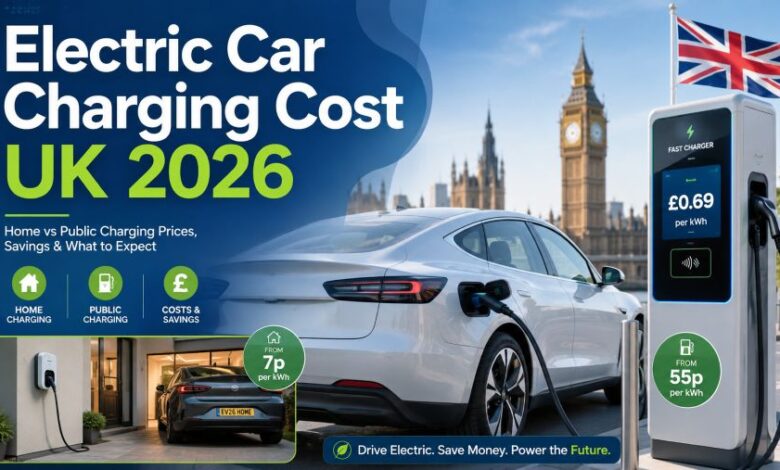
In the UK in 2026, a 60kWh electric car costs about £15.67 to fully charge at home, about £32.40 on a public standard or fast charger, and about £47.40 on a rapid or ultra-rapid charger.
Home charging is usually the cheapest option. Public rapid charging is faster, but it costs more.
Quick Charging Price Table
| Charging Type | 2026 Average Price | 60kWh Full Charge | Best For |
|---|---|---|---|
| Home charging | 26.11p/kWh | £15.67 | Daily charging |
| Public standard/fast charging | 54p/kWh | £32.40 | Town, shopping, work, parking |
| Public rapid/ultra-rapid charging | 79p/kWh | £47.40 | Motorway and long trips |
Ofgem shows the average UK electricity unit rate for Direct Debit customers at 26.11p/kWh from 1 July to 30 September 2026. Zapmap’s June 2026 public charging data shows average public prices of 54p/kWh for 3kW to 49kW chargers and 79p/kWh for 50kW+ rapid and ultra-rapid chargers.
How Much Does It Cost to Charge an Electric Car at Home?
Home charging is normally the cheapest way to charge an EV in the UK.
If your car has a 60kWh battery and you pay 26.11p per kWh, a full charge costs around £15.67.
Simple formula:
Battery size × electricity price = full charge cost
60kWh × £0.2611 = £15.67
Your real cost can change because every home is different. Some drivers pay the standard electricity rate. Some drivers use special EV tariffs and charge overnight at a lower price.
Home charging is best for:
- Daily driving
- Overnight charging
- Lower running cost
- Drivers with a driveway
- Drivers with private parking
If you are still choosing a car, read our Best Electric Cars 2025 guide before buying.
How Much Does Public EV Charging Cost?
Public charging is useful, but it is usually more expensive than home charging.
Public standard or fast chargers are often found in:
- Supermarkets
- Car parks
- Town centres
- Workplaces
- Hotels
- Shopping areas
Zapmap’s June 2026 average for 3kW to 49kW public chargers was 54p/kWh. That means a 60kWh full charge would cost about £32.40.
Public charging is helpful if you cannot charge at home. But if you use it every day, your EV running cost will be higher.
For more EV guides, visit our Electric & Hybrid Vehicles section.
How Much Does Rapid Charging Cost in the UK?
Rapid charging is the fastest type of public charging.
It is useful when you are travelling far and need a quick top-up. But it is also one of the most expensive ways to charge an electric car.
Zapmap’s June 2026 average for rapid and ultra-rapid chargers was 79p/kWh. That means:
| Rapid Charge Amount | Cost at 79p/kWh |
|---|---|
| 20kWh top-up | £15.80 |
| 40kWh top-up | £31.60 |
| 60kWh full charge | £47.40 |
| 75kWh full charge | £59.25 |
| 100kWh full charge | £79.00 |
Rapid charging is best for long trips, not daily use.
Full Charge Cost by Battery Size
Different electric cars have different battery sizes.
A small city EV may have a 40kWh battery. A family SUV may have a 60kWh, 75kWh or 100kWh battery.
| Battery Size | Home at 26.11p/kWh | Public Fast at 54p/kWh | Rapid at 79p/kWh |
|---|---|---|---|
| 40kWh | £10.44 | £21.60 | £31.60 |
| 50kWh | £13.06 | £27.00 | £39.50 |
| 60kWh | £15.67 | £32.40 | £47.40 |
| 75kWh | £19.58 | £40.50 | £59.25 |
| 100kWh | £26.11 | £54.00 | £79.00 |
A bigger battery costs more to fill, but it usually gives more range.
Cost From 10% to 80%
Many EV drivers do not charge from 0% to 100% on public rapid chargers.
On long trips, many people charge from 10% to 80% because it is faster and better for journey planning.
For a 60kWh battery, 10% to 80% means adding about 42kWh.
| Charging Type | Cost for 10% to 80% |
|---|---|
| Home charging | £10.97 |
| Public standard/fast charging | £22.68 |
| Rapid/ultra-rapid charging | £33.18 |
This is a useful real-world example because many drivers use this charging pattern on motorway journeys.
Electric Car Cost Per Mile
Cost per mile tells you how much each mile costs to drive.
Let’s use a simple electric car that can travel 4 miles per kWh.
| Charging Type | Price per kWh | Approx Cost per Mile |
|---|---|---|
| Home charging | 26.11p | 6.5p per mile |
| Public standard/fast charging | 54p | 13.5p per mile |
| Rapid/ultra-rapid charging | 79p | 19.8p per mile |
This is why home charging matters so much.
The same electric car can be cheap or expensive to run depending on where you charge it.
Is EV Charging Cheaper Than Petrol?
For many UK drivers, EV charging is cheaper than petrol when they charge at home.
The saving becomes smaller if the driver uses public rapid chargers most of the time.
A simple rule is:
| Option | Running Cost |
|---|---|
| Home charging | Usually cheapest |
| Public fast charging | Medium cost |
| Rapid charging | Most expensive EV charging option |
| Petrol | Depends on fuel price and MPG |
So, an electric car can still be cheaper to run in 2026, but only if the driver charges smartly.
If you charge at home most of the time, an EV can be a strong money-saving choice. If you rely on rapid chargers every day, the saving can become much weaker.
Home Charging vs Public Charging
| Feature | Home Charging | Public Charging |
|---|---|---|
| Price | Usually cheaper | Usually higher |
| Best time | Overnight | During travel |
| Best user | Driveway owner | Driver without home charger |
| Speed | Slower unless wallbox fitted | Fast or rapid options available |
| Convenience | Very easy at home | Depends on charger location |
| Main problem | Needs parking access | Higher cost |
Home charging is best for daily use.
Public charging is best for backup, travel and drivers who cannot install a charger at home.
Why Is Public Charging More Expensive?
Public chargers cost more because charging companies have more costs.
They must pay for:
- Charger equipment
- Installation
- Grid connection
- Land or parking space
- Repairs and maintenance
- Payment systems
- Customer support
- Fast charging technology
Rapid chargers are more expensive because they give power quickly. You are paying for speed and convenience.
This is why motorway rapid chargers usually cost much more than charging at home.
How Much Would 8,000 Miles a Year Cost?
Let’s say you drive 8,000 miles per year.
If your EV does 4 miles per kWh, you need about 2,000kWh of electricity per year.
| Charging Style | Yearly Cost |
|---|---|
| Mostly home charging | About £522 |
| Mostly public fast charging | About £1,080 |
| Mostly rapid charging | About £1,580 |
This table gives the clearest answer:
Where you charge matters more than the car itself.
Can EV Tariffs Reduce Charging Costs?
Yes, EV tariffs can reduce charging costs if you charge at the right time.
Many EV tariffs give cheaper electricity during off-peak hours, often at night. This can make home charging much cheaper than using the standard daytime rate.
EV tariffs are best for drivers who:
- Have a home charger
- Can charge overnight
- Drive regularly
- Want lower running costs
- Can schedule charging times
Before choosing a tariff, check the night rate, day rate and standing charge.
A cheap night rate is useful, but a high day rate may not suit every household.
Is a Home Charger Worth It?
A home charger can be worth it if you have private parking.
It makes charging easier, safer and more convenient than using a normal plug. It also helps you use off-peak tariffs properly.
A home charger is best if:
- You own or rent a home with parking
- You drive most days
- You want cheaper charging
- You want overnight charging
- You plan to keep an EV long term
If you cannot install a home charger, check nearby public chargers before buying an EV.
UK Public Charging Network in 2026
The UK charging network is growing.
Zapmap reported that there were more than 121,000 public EV chargers in the UK by the end of May 2026. This means drivers have more charging options than before, although charger access can still vary by area.
Big cities and motorway routes usually have better coverage. Rural areas and smaller towns may still need more chargers.
This is why EV buyers should check local charging before choosing a car.
Best Charging Option by Driver Type
| Driver Type | Best Charging Choice |
|---|---|
| Homeowner with driveway | Home charging |
| Flat owner | Local public charger or workplace charger |
| Long-distance driver | Home charging plus rapid charging |
| City driver | Small EV and local charging |
| Family driver | Home charging with planned rapid stops |
| Business driver | Workplace charging and public network planning |
Drivers using vans or business vehicles should also understand the difference between a commercial vehicle and non-commercial vehicle because tax, use and running costs can be different.
How to Save Money on EV Charging
Charge at Home When Possible
Home charging is usually the cheapest option.
If you can charge overnight, you may save even more.
Avoid Rapid Charging for Daily Use
Rapid charging is useful, but it should not be your main charging method if you want low costs.
Use rapid chargers for long journeys.
Check the Price Before Plugging In
Different public networks charge different prices.
Always check the pence-per-kWh rate before charging.
Use Slow or Fast Chargers When You Have Time
If you are shopping, working or staying somewhere for a few hours, a slower public charger may be cheaper than a rapid charger.
Keep Your Car Efficient
Smooth driving can reduce cost.
Avoid hard acceleration, keep tyres at the right pressure and remove extra weight from the car.
What Buyers Should Check Before Getting an EV
Before buying an electric car, ask these questions:
- Can I charge at home?
- Is there a charger near my house?
- How much does public charging cost near me?
- How many miles do I drive each week?
- Do I need rapid charging often?
- What battery size do I need?
- Is an EV tariff available for my home?
- Will I use the car for long motorway trips?
If you are comparing future car brands and EV market changes, our articles on Antonio Filosa and Maria Grazia Davino explain how major automotive leaders are dealing with electric vehicle competition in Europe.
Best Simple Advice for UK Drivers
If you can charge at home, an electric car can be cheaper to run.
If you cannot charge at home, check your local public charging prices first.
Do not buy an EV only because the official range looks good. Buy it because the charging plan fits your real life.
The best EV setup is:
Home charging for daily use
Public fast charging when needed
Rapid charging only for long trips
Frequently Asked Questions
How much does it cost to charge an electric car in the UK in 2026?
A 60kWh electric car costs about £15.67 to fully charge at home using the 26.11p/kWh Ofgem unit rate. The same full charge costs about £32.40 on a public fast charger at 54p/kWh and £47.40 on a rapid charger at 79p/kWh.
Is home charging cheaper than public charging?
Yes. Home charging is usually cheaper than public charging. Public chargers cost more because they include installation, maintenance, network and convenience costs.
How much does rapid charging cost?
Using the June 2026 Zapmap average of 79p/kWh, a 60kWh rapid charge costs about £47.40.
How much does an electric car cost per mile?
If an EV does 4 miles per kWh, it costs about 6.5p per mile at home, 13.5p per mile on public fast charging and 19.8p per mile on rapid charging.
Is EV charging cheaper than petrol?
It can be cheaper than petrol if you charge at home. If you mostly use rapid public chargers, the saving can become much smaller.
What is the cheapest way to charge an electric car?
The cheapest way is usually home charging overnight on a suitable EV tariff.
Should I use rapid chargers every day?
No, not if you want low running costs. Rapid chargers are best for long journeys and emergency top-ups.
Does a bigger EV battery cost more to charge?
Yes. A bigger battery costs more to fully charge, but it usually gives more driving range.
Can I run an electric car without a driveway?
Yes, but you should check local public chargers first. Without home charging, your running cost may be higher.
Is a home charger worth it?
Yes, for many drivers with private parking. It makes charging easier and can help reduce costs.
Final Thoughts
Charging an electric car in the UK is simple when you understand the three main prices.
Home charging is usually the cheapest. Public charging costs more. Rapid charging is the most expensive, but it is useful for long trips.
For most UK drivers, the best answer is clear:
An electric car can still be cheap to run in 2026, but the biggest saving comes from charging at home and using rapid chargers only when needed.