
Commercial Vehicle vs Non-Commercial Vehicle: Smart UK Guide
Clear 2026 Guide to Vehicle Use, Tax, Insurance and Licence Rules

Introduction
A vehicle can look simple from the outside, but its real use can change everything.
In the UK, a vehicle may be treated differently for insurance, tax, driving licence rules and business compliance depending on whether it is used for work or private life.
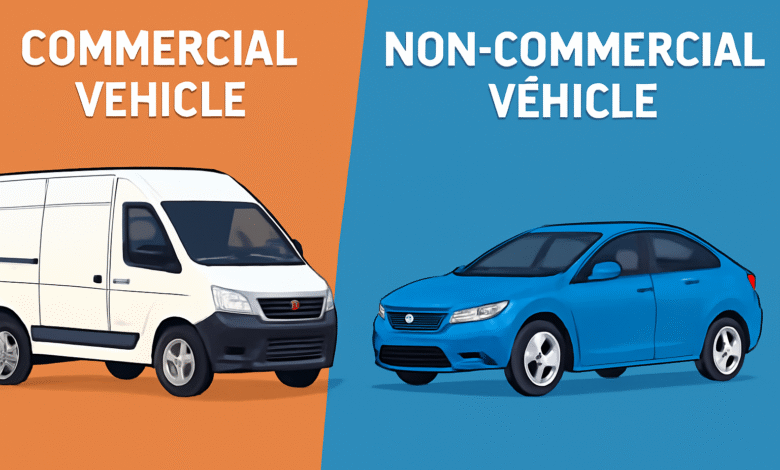
The simple answer is this: a commercial vehicle is mainly used for business, trade, deliveries, tools, goods or paid transport. A non-commercial vehicle is mainly used for personal travel, family use, shopping, school runs and normal daily driving.
But the full answer is not always based only on the vehicle shape. A van, pick-up, SUV or car can fall into different rules depending on how it is used, how much it weighs and who owns it.
Quick Answer
A commercial-use vehicle is normally connected to work.
This can include a plumber’s van, courier van, delivery vehicle, company van, work pick-up, lorry, recovery truck or a vehicle used to carry tools, stock or equipment.
A non-commercial-use vehicle is mainly used for private life.
This can include a family SUV, personal car, private electric car, motorcycle or personal-use van.
The key difference is not just the body type. The key difference is the purpose of use.
What Is a Commercial Vehicle?
A commercial vehicle is a vehicle used mainly for business or trade.
It may carry goods, tools, equipment, parcels, materials or passengers for payment.
Common examples include:
- Plumber van
- Electrician van
- Builder pick-up
- Courier van
- Delivery vehicle
- Company van
- Recovery vehicle
- Lorry or HGV
- Work minibus
- Vehicle used to carry stock or equipment
A small van can be commercial if it is used for work. A larger vehicle can also be commercial if it carries goods or supports a business.
For example, a plumber using a van to carry pipes, tools and fittings is using that van for commercial purposes.
What Is a Non-Commercial Vehicle?
A non-commercial vehicle is mainly used for personal travel.
It is not mainly used to carry goods, tools or passengers for business income.
Common examples include:
- Family SUV
- Private car
- Personal motorcycle
- Personal electric car
- School-run car
- Weekend-use vehicle
- Private-use campervan
For example, a family SUV used for shopping, school runs and holidays is a non-commercial vehicle.
Even if the vehicle is large, it may still be private-use if it is not used for trade, delivery or business activity.
Main Difference Between Both Vehicle Types
The biggest difference is use.
A private car is normally used for daily life. A work vehicle is normally used to support a business.
A family car used only for personal journeys normally needs private motor insurance. But if the same car is used for client visits, work meetings or business errands, business use may need to be added to the insurance policy.
That is why drivers should not only ask, “What type of vehicle is this?”
They should also ask, “How is this vehicle being used?”
Easy Comparison Table
| Point | Commercial-Use Vehicle | Non-Commercial-Use Vehicle |
|---|---|---|
| Main use | Business, trade, goods or paid transport | Personal and family travel |
| Common example | Plumber van, delivery van, work pick-up | Family SUV, private car, motorcycle |
| Insurance | May need business or commercial cover | Usually private motor insurance |
| Tax position | May have business, van or company tax rules | Usually private vehicle tax rules |
| Licence issue | Weight may require extra licence category | Most cars use normal Category B |
| Risk level | Higher mileage, tools, cargo or work use | Normal private driving risk |
| Best for | Trades, deliveries, companies, fleets | Family, commuting, leisure, private life |
Practical Examples
Plumber Van
A van used by a plumber to carry tools, pipes and work materials is a commercial-use vehicle.
It is being used for trade, so the owner should check commercial van insurance, business use, tool cover and any tax position linked to company ownership.
Family SUV
A family SUV used for shopping, school runs, holidays and private journeys is a non-commercial-use vehicle.
It normally needs private motor insurance and is treated like a personal vehicle unless it is also used for work.
Private Car Used for Client Visits
A private car can become business-use if the driver uses it to visit clients, attend business meetings or travel for work.
In this case, normal private insurance may not be enough. The driver should check whether business use is included.
For safer driving and UK road awareness, drivers can also read this guide on speed camera locations before regular work travel.
Double Cab Pick-Up
A double cab pick-up can look like a work vehicle because it can carry tools and goods.
But for company tax, many double cab pick-ups made available from 6 April 2025 are expected to be treated as cars when calculating the benefit charge. This is important for employers, company directors and employees who use pick-ups for both work and private journeys.
You can read the official HMRC guidance on double cab pick-up benefit rules.
Vehicle Tax and Why It Matters
Vehicle tax can depend on the vehicle type, fuel type, emissions, registration date, weight and tax class.
Light goods vehicles have their own tax treatment. GOV.UK lists light goods vehicles as vehicles registered on or after 1 March 2001 and not over 3,500kg revenue weight.
This matters because a van, pick-up or converted vehicle may not be taxed in the same way as a normal private car.
If you are buying a used vehicle for business or private use, check the paperwork carefully. A guide like how to check how many owners a car has had can also help when reviewing a vehicle’s history.
Insurance Rules
Every vehicle used on UK roads must have motor insurance.
Third party insurance is the legal minimum in the UK. It covers damage or injury caused to another person, vehicle, animal or property, but it does not cover repairs to your own vehicle.
You can check the official GOV.UK page on vehicle insurance rules.
For private drivers, a normal car insurance policy may be enough.
For business drivers, extra cover may be needed, such as:
- Business use
- Commercial van insurance
- Goods-in-transit cover
- Tool cover
- Fleet insurance
- Courier insurance
- Public liability cover
A driver should not use a private policy for business work unless the policy clearly allows it.
Driving Licence Rules
In the UK, the licence needed depends mainly on the vehicle category and maximum authorised mass.
A normal Category B licence can cover many cars and vans, but heavier vehicles may need extra categories.
For example, Category C1 covers vehicles between 3,500kg and 7,500kg maximum authorised mass. Category C covers vehicles over 3,500kg.
This is why weight is important when buying a van, motorhome, recovery truck, horsebox or larger work vehicle.
A driver should always check the vehicle weight before assuming a normal car licence is enough.
Operator Licence Rules
Some business vehicles may need a goods vehicle operator’s licence.
This usually applies when a goods vehicle over 3.5 tonnes gross plated weight is used to transport goods for hire or reward, or in connection with a trade or business.
This rule is important for businesses using larger vans, lorries or vehicle-and-trailer combinations.
Small business owners should check this before using a heavy vehicle for deliveries, construction work, transport or haulage.
Company Vans and Private Use
A company van can create tax issues if an employee or director also uses it privately.
For the 2026 to 2027 tax year, the UK van benefit charge is £4,170 where a van is made available for private use. The van fuel benefit charge is £798.
This means business owners should be careful when a company van is used for more than work-only journeys.
If a van is used only for work and ordinary commuting, the tax position may be different from a van used for regular private journeys.
For wider company car and benefit changes, this guide on Rachel Reeves BIK tax changes is also useful.
Double Cab Pick-Up Update for 2025 and 2026
Double cab pick-ups need special attention.
From 6 April 2025, most double cab pick-ups are expected to be treated as cars for Benefit-in-Kind purposes when calculating the benefit charge.
This does not mean every pick-up is useless for work. A pick-up can still be used by builders, farmers, tradespeople and site workers.
But if it is a company vehicle and also available for private use, the tax bill may be very different from older van-style treatment.
There are also transitional rules for some vehicles bought, leased or ordered before 6 April 2025.
This is one of the most important updates to include because many UK drivers still think every double cab pick-up is treated like a van.
Can a Private Car Be Used for Business?
Yes, a private car can be used for business, but the insurance must match the use.
A driver may need business cover if the car is used for:
- Client visits
- Business meetings
- Work errands
- Travelling between work sites
- Carrying business items
- Regular work-related journeys
Normal commuting is not always the same as business use. Drivers should check the wording of their insurance policy before using a personal car for work.
Can a Van Be Used Privately?
Yes, a van can be used privately.
Some people use vans for hobbies, camping, moving items, family needs or sports equipment.
But the insurance should match the real use.
A private-use van policy is different from courier insurance, trade van insurance or goods-in-transit cover.
If the van is owned by a business and available for private journeys, company van tax rules may also apply.
Buying or Leasing: What Should You Check?
Before buying or leasing a vehicle, check how it will be used.
Ask these questions:
- Will it carry tools or stock?
- Will it be used for deliveries?
- Will it visit clients or job sites?
- Will it be owned by a company?
- Will employees use it privately?
- Is it over 3,500kg?
- Is it a double cab pick-up?
- Does the insurance cover the real use?
- Does the tax class match the vehicle?
If you do not want to buy outright, you can also read this guide on whether you can lease a used vehicle.
Maintenance and Running Costs
Commercial-use vehicles often work harder than private cars.
They may carry heavy tools, drive more miles and spend more time in traffic. This can increase tyre wear, brake wear, fuel costs and servicing costs.
For business owners, regular maintenance is not optional. A broken van can stop work, delay deliveries and cost money.
If you want to understand normal servicing costs, read this guide on full service cost for car.
Which Vehicle Type Is Better?
There is no single best option for everyone.
A commercial-use vehicle is better if you need load space, payload, tools, business mileage or delivery ability.
A non-commercial-use vehicle is better if you need comfort, family space, private travel and lower work-related complexity.
The right choice depends on real use, not only appearance.
A van can be private.
A car can need business insurance.
A pick-up can be useful for work but taxed differently as a company vehicle.
Common Mistakes to Avoid
Avoid these mistakes:
- Using a private car for business without checking insurance
- Assuming every van is automatically commercial
- Assuming every SUV is always private
- Ignoring vehicle weight and licence rules
- Forgetting company van private-use tax
- Buying a double cab pick-up without checking BIK rules
- Using a heavy goods vehicle for business without checking operator licence rules
These mistakes can lead to invalid insurance, tax problems, fines or unexpected business costs.
FAQs
What is the simple difference between both vehicle types?
A commercial-use vehicle is mainly used for business, tools, goods, deliveries or paid transport. A non-commercial-use vehicle is mainly used for private and family travel.
Is a plumber van a commercial vehicle?
Yes. If a plumber uses a van to carry tools, pipes and work materials, it is being used for commercial purposes.
Is a family SUV a non-commercial vehicle?
Yes. If the SUV is used for family travel, shopping, school runs and holidays, it is normally a non-commercial-use vehicle.
Can a private car be used for business?
Yes, but the driver may need business use on the insurance policy.
Does a commercial vehicle always need a special licence?
No. Many small vans can be driven on a normal Category B licence, but heavier vehicles may need C1 or C.
Is a double cab pick-up treated as a van or car?
For company tax, most double cab pick-ups made available from 6 April 2025 are expected to be treated as cars when calculating the benefit charge.
Can a van be used privately?
Yes. A van can be used privately, but the insurance and tax position should match the real use.
Do all business vehicles need an operator licence?
No. But goods vehicles over 3.5 tonnes used for trade, business or hire and reward may usually need a goods vehicle operator’s licence.
Final Thoughts
The difference between a work-use vehicle and a private-use vehicle is not only about shape.
It depends on use, insurance, tax class, weight, ownership and whether the vehicle is available for private journeys.
A plumber van is normally commercial.
A family SUV is normally non-commercial.
A private car used for client visits may need business insurance.
A double cab pick-up can still be useful for work, but company tax rules may treat it like a car.
Before buying, leasing or using any vehicle for work, always check the real use, insurance cover, vehicle tax class and licence rules.
That simple check can save money, avoid legal problems and help drivers stay properly covered on UK roads.


One Comment