Yellow Car Warning Lights: What Do They Mean?
Understand common amber dashboard symbols, what causes them, and what UK drivers should do when a warning appears.

A yellow light appears on your dashboard. What now?
Should you stop driving? Call a mechanic? Or simply check something?
Yellow car warning lights usually mean your vehicle needs attention. The problem might be small. Sometimes, though, it can affect safety.
Your car uses these lights for a reason. They help you spot problems early.
But every symbol means something different.
An engine-shaped light suggests one problem. A tyre symbol points to another. And a flashing warning might mean something quite different from a steady one.
Here is how to understand them.
Quick Facts About Yellow Car Warning Lights
| Quick Fact | Details |
|---|---|
| Warning colour | Yellow or amber |
| Main meaning | A system needs checking or maintenance |
| Common warnings | Engine, ABS, tyres, traction control |
| Warning level | Caution, with urgency depending on the fault |
| Can you keep driving? | Depends on the warning and vehicle condition |
| Common causes | Low fluid, sensor faults, worn parts |
| Recommended action | Check the handbook and seek help |
| UK MOT impact | Some malfunction warnings can cause failure |
What Do Yellow Car Warning Lights Mean?
Yellow dashboard warning lights tell you something needs checking.
They are also called amber dashboard warning lights.
Both colours carry the same general message.
Your vehicle has detected a condition worth investigating. It might involve the engine, tyres, brakes, or another system.
Some warnings are fairly simple.
Low washer fluid is one example. A faulty braking system is different.
That difference matters.
A yellow light does not automatically mean your car is safe to drive. You need to identify the symbol first.
Also, watch how the vehicle behaves.
Strange noises, smoke, power loss, or difficult steering can indicate a serious problem.
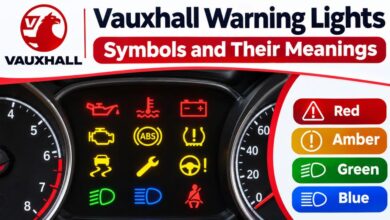
Yellow vs Red Car Warning Lights: What’s the Difference?
Dashboard warning colours help drivers understand urgency.
Here is the basic difference.
| Warning Colour | What It Means | Driver Action |
|---|---|---|
| Red | Serious problem or immediate danger | Stop safely and seek help |
| Yellow / Amber | Fault, maintenance need, or caution | Check promptly and follow vehicle guidance |
| Green | A feature is operating | Usually no action needed |
| Blue | A system is switched on | Usually informational |
| White | General information | Read the displayed message |
Red warnings usually need immediate attention.
Yellow warnings need checking too.
In the UK, National Highways advises drivers not to begin a journey with an unresolved amber warning.
If one appears while driving, find a safe place to assess the problem.
Never stop in a motorway live lane unless absolutely necessary.
Common Yellow Car Dashboard Symbols and Meanings
Cars use many dashboard fault indicators.
Some symbols are easy to recognise. Others can look confusing.
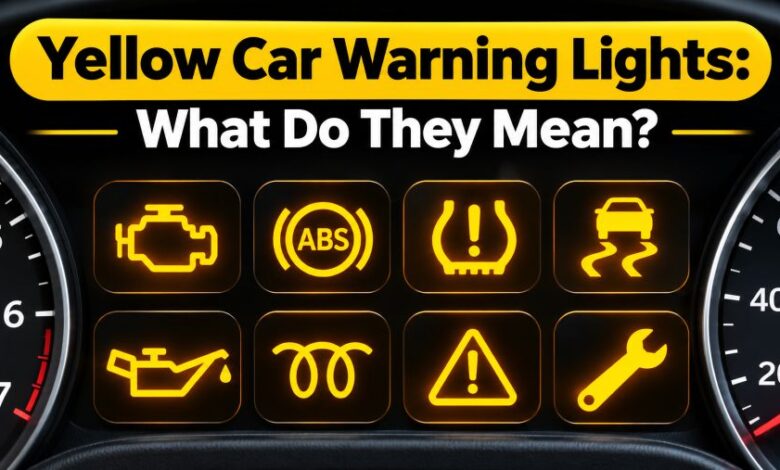
This table explains common yellow warning symbols in cars.
| Warning Symbol | Common Meaning | What to Check |
|---|---|---|
| Engine-shaped light | Engine management or emissions fault | Engine operation and fault codes |
| Tyre with ! | Low tyre pressure or TPMS fault | Tyre pressures and condition |
| ABS inside a circle | Anti-lock braking system fault | Braking system |
| Car with skid marks | Traction or stability control activity or fault | ESC or traction system |
| Brake pad symbol | Worn brake pads | Brake condition |
| Oil-can symbol | Low oil level on certain vehicles | Engine oil level |
| Filter symbol | Diesel particulate filter issue | DPF condition |
| Coil-shaped symbol | Diesel preheating or system fault | Glow plugs and engine management |
| AdBlue symbol | Low fluid or emissions-system problem | AdBlue level and warning message |
| Triangle with ! | General vehicle warning | Dashboard information display |
| Steering wheel with ! | Steering assistance fault | Steering operation |
| Spanner or wrench | Service reminder or system fault | Service schedule or dashboard message |
| Fuel-pump symbol | Low fuel | Fuel level |
| Windscreen spray symbol | Low washer fluid | Washer reservoir |
| Bulb with ! | Exterior lighting fault | Vehicle lights |
| Car with collision marks | Collision-warning system alert or fault | Surroundings and safety system |
| Gearbox symbol | Transmission warning | Gearbox operation |
| Snowflake | Possible icy conditions | Road temperature and grip |
Not every car uses identical symbols.
Their colour can differ too.
So check your owner’s manual before making assumptions.
Yellow Engine Warning Light: What Does It Mean?
An amber engine light deserves attention.
You may also hear it called the engine management light, check engine light, or EML.
It normally looks like a small engine.
Your vehicle’s computer has detected a problem.
Possible causes include:
- Faulty oxygen sensor
- Ignition system problem
- Mass airflow sensor fault
- Exhaust emissions problem
- Diesel particulate filter issue
These are possible causes, not a diagnosis.
A diagnostic scan can identify stored trouble codes. Further testing may still be needed.
What if the yellow engine light stays on?
A steady light means a fault needs investigating.
Arrange a professional check promptly.
Avoid unnecessary driving until you understand the fault. If the car loses power or runs badly, stop safely and seek assistance.
What if the yellow engine light flashes?
Take it more seriously.
A flashing engine warning can indicate a misfire. Continuing to drive may damage the catalytic converter.
Stop somewhere safe and seek assistance.
Do not assume the light will disappear.
Yellow ABS Warning Light
ABS stands for Anti-lock Braking System.
It helps stop your wheels locking during hard braking.
When its warning light stays illuminated, the system may have a fault.
Your conventional brakes might still work. However, anti-lock protection may be unavailable.
This can affect control during sudden braking.
Arrange an inspection promptly.
If a red brake warning also appears, or the brakes feel abnormal, stop safely and arrange recovery.
Yellow Tyre Pressure Warning Light
This symbol looks like a flattened tyre with an exclamation mark.
It is commonly called the TPMS warning.
TPMS means Tyre Pressure Monitoring System.
The warning can appear when tyre pressure drops. A puncture may also trigger it.
Sometimes, the monitoring system itself has failed.
What should you do?
Find a safe stopping place.
Look for visible tyre damage. Then check the pressures against the manufacturer’s recommendations.
Do not rely on appearance alone.
A tyre can look normal while underinflated.
If the tyre is flat or badly damaged, do not continue driving.
After correcting the pressure, follow your handbook’s TPMS reset instructions if needed.
Yellow Traction Control and ESP Warning Light
Have you seen a car with wavy lines underneath?
That symbol commonly relates to traction control or Electronic Stability Control.
Some vehicles call the system ESP or ESC.
It helps maintain stability when grip becomes limited.
A flashing light often means the system is working.
For example, it may flash briefly on a slippery road.
A steady warning is different.
The system might be switched off. It could also have developed a fault.
Check for an OFF message.
If the system reports a malfunction, arrange repairs.
Yellow Brake Pad Warning Light
Brake pads wear down with use.
Some cars monitor their condition electronically.
A yellow brake pad warning may mean the pads are approaching their wear limit.
Do not ignore it.
Worn pads can reduce braking performance. Continued use may also damage other brake components.
Book a brake inspection promptly.
If braking feels weak, noisy, or unusual, stop safely and get professional help.
Yellow Oil Warning Light
A yellow oil-can symbol can indicate low engine oil on some vehicles.
Other vehicles use it differently.
That is why the handbook matters.
Low oil levels can harm an engine if left unchecked.
Stop safely and check the oil using the correct procedure.
Top up only with the recommended oil.
Do not overfill it.
Important: A red oil-pressure warning is different. It can mean the engine is losing lubrication pressure and requires immediate safe stopping and engine shutdown.
Yellow Diesel Particulate Filter Warning
Diesel vehicles may display a DPF warning.
DPF stands for Diesel Particulate Filter.
The filter collects soot from exhaust gases.
Over time, soot can build up.
Certain driving conditions allow the vehicle to clean the filter through regeneration.
Frequent short journeys can make this harder.
If the warning appears, check the handbook.
Some vehicles may require a specific regeneration procedure. Others need professional diagnosis.
Never attempt a regeneration drive when another serious warning is present.
What Does an Amber Triangle Warning Light Mean?
A triangle containing an exclamation mark is often a general warning symbol.
It does not identify one specific fault.
Instead, it asks you to check another message.
The vehicle might be reporting a maintenance issue, a disabled system, or another condition.
Read the dashboard display.
If no explanation appears, check the handbook.
Avoid guessing based on the triangle alone.
Other Yellow Dashboard Warnings Worth Knowing
Not every amber light signals a major repair.
Some remind you to take action.
Low fuel warning
Your fuel level is getting low.
Find a suitable filling station soon.
Washer fluid warning
Your windscreen washer reservoir needs refilling.
Use suitable washer fluid.
Bulb failure warning
An exterior light may have failed.
Check the headlights, brake lights, indicators, and other lamps.
Service warning indicator
A service reminder can mean scheduled maintenance is due.
A spanner symbol can also indicate a fault on certain vehicles.
Check the accompanying message.
Steering assistance warning
A steering system fault can make steering harder.
Do not continue driving if steering becomes difficult or unpredictable.
Low-temperature warning
A snowflake symbol may indicate icy-road conditions.
It does not necessarily mean anything is broken.
Reduce speed where conditions require it.
Can You Drive With a Yellow Warning Light On?
This is a common question.
The answer depends on the fault.
A low washer-fluid warning is not the same as an ABS warning.
Still, yellow does not mean everything is fine.
National Highways advises drivers against starting a journey with an unresolved amber warning.
If the warning appears while driving, assess the situation safely.
Some faults may allow cautious movement to a nearby safe stopping place.
Others require immediate assistance.
Stop safely if you notice:
- Engine overheating
- Smoke or burning smells
- Severe power loss
- Unusual braking behaviour
- Difficult or unpredictable steering
- Loud mechanical noises
Do not keep driving simply because the warning is yellow.
What Should You Do When an Amber Warning Appears?
A warning can appear without notice.
Here is how to respond.
1. Check the warning symbol
Look at the dashboard carefully.
Identify the symbol and any message.
Do not ignore flashing warnings.
2. Watch how the car behaves
Notice changes in braking or steering.
Listen for unusual sounds.
Check for smoke or power loss.
3. Stop somewhere safe
Use a safe stopping area.
On motorways, leave at the next exit or use a service area if the vehicle can safely reach one.
Do not stop in a live lane unless absolutely necessary.
4. Read the vehicle handbook
The handbook explains the exact warning.
It may also tell you what checks are safe to perform.
5. Get the problem checked
Simple warnings may need a refill.
System faults may need diagnostic testing.
A mechanic can check the cause.
Avoid resetting fault codes without investigating them.
Why Do Yellow Warning Lights Come On?
Many different problems can trigger warnings.
Some involve everyday maintenance.
Others need professional repairs.
Common causes include:
- Low tyre pressure
- Engine sensor faults
- Worn brake components
- Low fluid levels
- Electrical system problems
- Faulty wheel-speed sensors
- Emissions-system faults
- Missed scheduled maintenance
A weak 12V battery can sometimes cause electrical warnings too.
But several lights appearing together do not prove the battery is faulty.
Proper testing matters.
Can Yellow Dashboard Warning Lights Fail an MOT?
Yes. Some warning lights can cause an MOT failure in the UK.
But the test depends on the fault and the vehicle.
An engine management malfunction indicator can cause a Major defect on vehicles covered by the relevant inspection rules.
ABS and electronic stability system faults can also cause failure.
A TPMS malfunction can be a Major defect on applicable vehicles.
However, a tyre-pressure warning does not automatically prove that the monitoring system has failed.
A low-fuel warning alone is not an MOT failure.
For the official rules, see the UK government’s MOT inspection manual.
Remember, a valid MOT does not guarantee that a vehicle remains roadworthy.
How to Prevent Common Dashboard Warning Lights
You cannot prevent every fault.
But regular checks can help.
Start with tyre pressure.
Check the recommended figures regularly.
Next, monitor engine oil and coolant levels. Follow the handbook’s checking instructions.
Keep an eye on brake condition.
Replace faulty exterior bulbs.
And follow the service schedule.
Diesel owners should also follow the correct DPF and AdBlue guidance.
These simple habits can help spot trouble early.
Frequently Asked Questions
1. What does a yellow warning light mean in a car?
It usually means a system needs checking or maintenance. The exact meaning depends on the dashboard symbol.
2. Can you drive with a yellow warning light on?
Sometimes limited movement to a safe stopping place is possible. But the fault determines the risk. UK road-safety advice recommends checking an unresolved amber warning before starting a journey.
3. What is the difference between red and yellow warning lights?
Red normally indicates a more urgent problem. Yellow generally means caution or maintenance. Both deserve attention.
4. Why is my yellow engine warning light on?
Possible causes include sensor faults, ignition problems, or emissions issues. A diagnostic inspection can help identify the cause.
5. What does an amber triangle warning light mean?
It usually indicates a general vehicle warning. Read the dashboard message for the actual problem.
6. Can a yellow warning light disappear on its own?
Yes, some temporary warnings disappear after conditions change. However, a light going out does not always mean the underlying fault is fixed.
7. Is an amber warning light an MOT failure?
Not always. Certain engine, ABS, stability-control, and tyre-monitoring malfunctions can cause failure under the applicable MOT rules.
8. Why are several yellow lights showing together?
Multiple warnings can appear when related vehicle systems detect faults. Electrical or sensor problems may also affect several systems. Proper testing is needed to identify the cause.
Final Thought
Yellow car warning lights are easy to overlook.
But ignoring them can be costly.
Some warnings need simple maintenance. Others point to problems affecting safety.
The important thing is knowing the difference.
Check the symbol. Read the message. Watch how your car behaves.
And get help when needed.
A warning light is information. Use it before a small problem becomes a bigger one.