Car Won’t Start? Common Causes and What to Check
Find out why your car is not starting, what the warning signs mean, and which checks UK drivers can safely try before calling a mechanic.

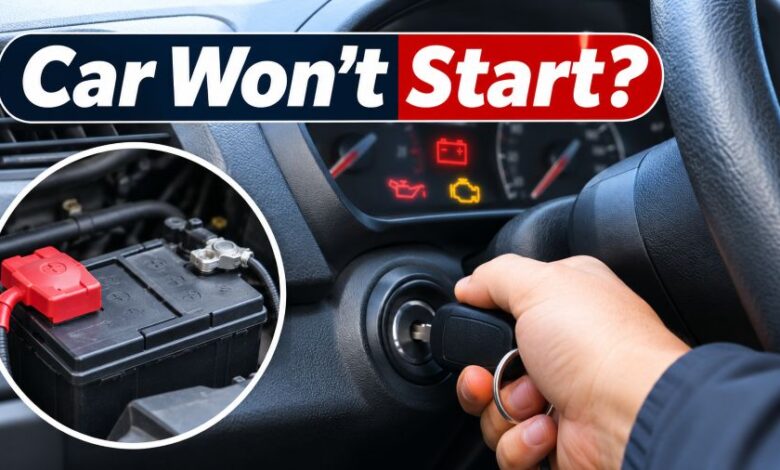
Your car won’t start. Great timing, right?
Maybe you’re leaving for work. You turn the key, but nothing happens. Or the engine makes a clicking sound and refuses to start.
It’s frustrating. That’s for sure.
A flat battery could be responsible. But starter motor faults, fuel problems, and electrical failures can cause similar trouble.
The sound matters. So do the dashboard lights.
Before replacing anything, check the symptoms. A few simple observations can help you understand what might be wrong.
This guide explains common car starting problems, safe checks, and signs that you need professional help.
Quick Facts About Car Starting Problems
| Quick Fact | Details |
|---|---|
| Main problem | Car won’t start |
| Common cause | Flat or weak 12V battery |
| Other possible causes | Starter motor, fuel system, ignition, electrical faults |
| Clicking noise | Often linked to battery or starter circuit problems |
| Engine turns over | Fuel, ignition, sensor or mechanical faults may be involved |
| Dashboard lights work | Battery or starter problems remain possible |
| Cold weather | Can make weak battery problems worse |
| First check | Battery, fuel, warning lights and starting controls |
| Possible solution | Battery charging, jump-starting or mechanical repair |
| Professional help | Needed for persistent or serious starting faults |
Why Won’t My Car Start?
A car needs several systems working together.
The battery supplies electrical power. The starter motor turns the engine. Fuel and ignition systems help the engine run.
If something fails, starting becomes difficult.
Sometimes the cause is simple. A discharged battery might need charging.
Other cases need proper testing. A faulty fuel pump or electrical component may show similar symptoms.
First, watch what happens.
Does the engine turn over? Do the headlights dim? Does the dashboard display a warning?
These small details can help.
10 Common Reasons Your Car Won’t Start
1. Flat or Dead Car Battery
Battery trouble is a common cause.
Your car battery supplies power for starting. If its charge drops too low, the starter motor may struggle.
You might hear repeated clicking. The dashboard could flicker or go dark.
Common reasons include:
- Leaving headlights or interior lights on.
- Taking frequent short journeys.
- Leaving the vehicle unused.
- An ageing or damaged battery.
- Problems with the charging system.
A jump-start may get you moving.
Still, that isn’t always a lasting fix.
If the battery keeps losing charge, have it tested. You may need charging, replacement or an electrical repair.
2. Loose or Corroded Battery Terminals
Sometimes the battery has enough charge.
The connection is the problem.
Battery terminals carry electrical current. Loose connections or corrosion can interrupt that flow.
You might notice intermittent starting, flickering lights or complete electrical failure.
Check the terminals visually.
Look for obvious damage or corrosion. Do not touch exposed wiring unnecessarily.
If a connection needs repair, follow the vehicle handbook or ask a mechanic.
3. Faulty Starter Motor
The starter motor turns the engine.
If it fails, the engine may not crank.
You might hear one loud click. Sometimes nothing happens at all.
A faulty solenoid or starter relay can cause similar symptoms.
But don’t replace the starter immediately.
A weak battery or poor connection can produce the same behaviour.
Get the battery and starter circuit tested first.
4. Alternator or Charging-System Problems
The alternator charges the battery while a conventional petrol or diesel engine runs.
If charging fails, battery power eventually drops.
Your car might start normally once. Then it refuses to start later.
Watch for these warning signs:
- Battery warning light while driving.
- Headlights becoming unusually dim.
- Repeated battery discharge.
- Electrical accessories behaving strangely.
A faulty alternator isn’t the only possibility. Wiring, drive belts or charging controls can also fail.
Have the charging system checked.
5. Faulty Ignition Switch or Starting Circuit
You turn the key. Nothing happens.
The ignition switch or starting circuit may be responsible.
Modern vehicles also use relays, control modules and safety switches.
A damaged component can interrupt the starting signal.
Some cars won’t crank unless the clutch or brake pedal is pressed correctly.
Automatic vehicles may require Park or Neutral.
Check these basic controls first.
If the problem continues, electrical testing may be needed.
6. Fuel Pump or Fuel Delivery Problems
Your engine needs the correct fuel supply.
Without it, combustion cannot continue.
A faulty fuel pump, blocked filter or fuel-pressure problem may stop the engine starting.
Sometimes the engine turns normally. It simply never fires.
Check the fuel gauge first.
Running out of fuel is easy to overlook, especially if the fuel gauge or sender is faulty.
If the tank has fuel, further testing may be necessary.
Don’t keep cranking the engine endlessly.
7. Worn Spark Plugs or Ignition Coils
Petrol engines need a reliable spark.
Spark plugs and ignition coils help produce it.
Faulty components can cause misfires, rough running or starting trouble.
You may notice poor acceleration before the engine stops starting.
However, these symptoms aren’t unique.
Fuel faults and engine sensors can cause similar problems.
A mechanic can check the ignition system.
8. Immobiliser or Car Key Problems
Your car might reject its own key.
Many vehicles use an electronic immobiliser. It helps stop unauthorised starting.
If the system cannot recognise the key, the engine may not start or may stop shortly after starting.
Check for a security warning.
A weak key-fob battery may affect keyless systems, though many vehicles have an emergency starting method.
Try a spare key if available.
Use the handbook to find the correct procedure.
9. Faulty Engine Sensors
Modern engines rely on sensor information.
The engine control unit uses that data to manage starting and running.
Some sensor faults can prevent starting.
A crankshaft position sensor is one example. It helps the engine control system identify crankshaft movement and position.
A faulty reading can interrupt ignition or fuel control.
Warning lights may appear.
A diagnostic scan can help identify possible faults, but stored codes still need proper interpretation.
10. Engine Timing or Mechanical Failure
Some starting problems are more serious.
A damaged timing belt or chain can prevent normal engine operation.
Loss of compression or internal engine damage may also stop starting.
Unusual mechanical noises deserve attention.
If the engine cranks abnormally fast or you suspect a timing failure, stop trying to start it.
Arrange a professional inspection.
Car Won’t Start? Check These Symptoms
Not every starting failure looks alike.
The sound often gives an early clue.
| What Happens? | Possible Problem | What to Check |
|---|---|---|
| No lights or sounds | Flat battery or power connection | Battery and electrical supply |
| Repeated clicking | Weak battery or poor connection | Battery condition |
| Single click | Starter motor or starting circuit | Battery and starter |
| Engine turns but won’t fire | Fuel, ignition or sensor issue | Fuel level and warnings |
| Lights work but no crank | Starter, battery or control fault | Battery and starting controls |
| Starts then stops | Fuel, immobiliser or engine fault | Warning lights |
| Slow cranking | Weak battery or mechanical resistance | Battery condition |
| Won’t start when cold | Battery or cold-start problem | Battery and vehicle handbook |
These are possible causes, not confirmed diagnoses.
Car Won’t Start but Lights Come On
This problem confuses many drivers.
The headlights work. The radio plays. Yet the engine refuses to start.
So, is the battery fine?
Not necessarily.
Starting an engine needs much more electrical current than powering dashboard lights or a radio.
A weak battery may run accessories but fail under starter load.
Other possibilities include:
- Faulty starter motor.
- Loose battery connections.
- Damaged starter relay.
- Ignition switch failure.
- Faulty clutch or brake switch.
A battery load test can help identify the problem.
Car Won’t Start but Battery Is Fine
First, make sure the battery was tested.
Working headlights aren’t enough proof.
If a proper battery test confirms its condition, check the starting circuit and other vehicle systems.
A faulty starter motor might prevent cranking.
If the engine cranks normally but won’t fire, investigate fuel delivery, ignition, immobiliser and engine-management faults.
A new battery doesn’t guarantee an easy start either.
Incorrect connections, charging problems or another existing fault may still stop the vehicle.
Car Won’t Start and Makes a Clicking Noise
Clicking sounds can mean different things.
Repeated Clicking
Several quick clicks often suggest insufficient electrical power reaching the starter.
The battery may be weak.
Poor terminals or cables can also interfere.
Start with a battery test.
One Loud Click
A single click may come from the starter solenoid.
The motor might not turn.
However, poor electrical connections and battery problems can cause this too.
Check those before replacing parts.
No Clicking Noise
Complete silence could mean the starter never received its starting signal.
Possible causes include electrical supply faults, ignition controls, relays or safety switches.
Look at the dashboard.
If every light stays off, check the electrical supply first.
Car Turns Over but Won’t Start
This is a different problem.
The starter spins the engine. You can hear it turning.
But the engine never runs.
Possible reasons include fuel delivery failure, faulty ignition components, sensor problems and engine mechanical faults.
Diesel vehicles may have different cold-start or fuel-system issues.
Check for warning messages.
Also check the fuel level.
If the engine has been cranking repeatedly without starting, stop and arrange diagnosis.
Continued cranking can drain the battery and may cause further problems.
Car Won’t Start in Cold Weather
Cold mornings can expose weak batteries.
Low temperatures reduce battery performance. The engine may also need more effort to turn.
That’s why winter starting problems are common.
You might notice slow cranking, clicking noises or repeated failed attempts.
Diesel vehicles can experience additional trouble if glow plugs or their control system fail.
Here’s what helps:
- Keep the battery in good condition.
- Check battery health before winter.
- Use the correct engine oil specification.
- Avoid leaving electrical accessories running unnecessarily.
- Follow the manufacturer’s cold-start instructions.
If your car won’t start after sitting overnight, check the battery first.
But remember, overnight discharge can also indicate a fault.
Car Won’t Start After a Short Journey
You drive a short distance.
You park. Then the car refuses to restart.
Several faults could explain this.
The battery may have been too weak to recover its charge during the journey.
The alternator might not be charging correctly.
A heat-related starter or electrical fault is another possibility.
Notice whether the engine cranks.
If this keeps happening, arrange battery, charging-system and starter tests.
Car Won’t Start After Running Out of Fuel
An empty tank is one possible reason.
Adding fuel may solve it.
But some vehicles need more attention.
Diesel fuel systems can require a specific priming procedure after running dry.
Repeated cranking may not help.
Follow the handbook.
If the engine still won’t start, call a mechanic or breakdown provider.
If you accidentally used the wrong fuel, do not start the engine. Arrange specialist assistance.
What to Do When Your Car Won’t Start
Before trying repairs, make sure you’re safe.
Never inspect a vehicle beside moving traffic.
Check the Fuel Gauge
Start with the simplest possibility.
Make sure there’s enough fuel.
Look at the Dashboard
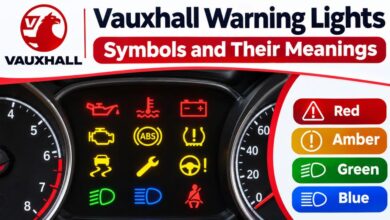
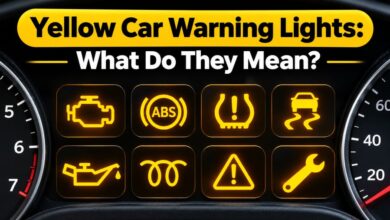
Watch for battery, engine or security warnings.
A warning symbol can help narrow the cause.
Listen to the Engine
Try to identify the sound.
Is there silence? Clicking? Slow cranking?
Or does the engine turn normally?
Check the Battery
Look for weak electrical power.
A resting 12V lead-acid battery may read around 12.6 volts when fully charged, but voltage varies with battery type and conditions.
A voltage reading alone cannot confirm battery health.
Check the Starting Controls
Automatic cars usually need Park or Neutral.
Some manual cars require the clutch pedal to be fully pressed.
Push-button vehicles may need the brake pedal pressed.
Follow your vehicle’s instructions.
Get Professional Help
If these checks reveal nothing, avoid guessing.
A proper diagnosis can save unnecessary repair costs.
Can You Jump-Start a Car That Won’t Start?
Sometimes, yes.
Jump-starting can help when the 12V battery lacks enough charge.
But it won’t repair a damaged starter motor, broken timing system or faulty fuel pump.
Check the vehicle handbook first.
Use the correct battery connections and approved earthing points.
Never jump-start a battery that’s damaged, leaking or frozen.
Hybrid and electric vehicles can have different rules. Do not use one as a donor vehicle unless its manufacturer permits it.
If you’re unsure, call breakdown assistance.
After a successful jump-start, the battery may still need a full recharge and testing.
When Should You Stop Trying to Start the Car?
Some situations need immediate caution.
Stop attempting to start the engine if:
- You smell petrol or notice a fuel leak.
- Smoke appears around the vehicle.
- You hear unusual mechanical grinding.
- The battery looks damaged or leaks.
- The engine stopped after driving through deep water.
- You suspect serious timing or internal engine damage.
Keep yourself safe first.
If you’re stranded on a UK motorway, follow the Highway Code’s breakdown rules.
Move to a safe place where possible. Use hazard warning lights and contact assistance.
If you’re in immediate danger, call 999.
How to Prevent Car Starting Problems
You cannot prevent every breakdown.
But regular checks can reduce some risks.
Keep the battery healthy. Have it tested if starting becomes slow.
Watch warning lights. A battery or engine warning deserves attention.
Avoid repeated short trips where possible. They may leave insufficient time to replace energy used during starting.
Service the vehicle properly. Follow the manufacturer’s maintenance schedule.
Check before winter. Cold weather can expose battery weakness.
Fix small electrical faults. Repeated starting trouble should not be ignored.
These habits won’t guarantee a trouble-free car, but they can help identify problems early.
Frequently Asked Questions
1. Why won’t my car start even though the lights work?
The battery may still be weak.
Headlights need less current than starting the engine. A faulty starter motor, poor connection or starting-control problem could also be responsible.
2. What is the most common reason a car won’t start?
A flat or weak battery is a common cause of starting failures.
However, the actual cause depends on the symptoms. Clicking noises and slow cranking often point towards electrical power problems.
3. Why does my car click but not start?
Repeated clicking often suggests insufficient power reaching the starter.
A single click may indicate a starter or solenoid problem. Battery and cable faults can produce similar sounds.
4. Can a bad alternator stop a car starting?
Yes, indirectly.
A failed charging system can leave the battery too discharged to start the engine.
The alternator itself normally isn’t responsible for cranking the engine.
5. Why is my engine turning over but not starting?
Fuel delivery, ignition, sensor or mechanical faults may be involved.
If the starter turns the engine normally, check fuel and warning messages before arranging professional diagnosis.
6. Why won’t my car start in the morning?
A weak battery may struggle after sitting overnight.
Cold temperatures can make this worse. Electrical drain, fuel problems and other faults are also possible.
7. Can a car fail to start with a new battery?
Yes, it can.
A new battery won’t fix starter faults, charging failures, damaged wiring or fuel-system problems.
A replacement battery also needs the correct specification and installation.
8. Should I keep trying if my car won’t start?
Avoid repeated prolonged attempts.
Cranking can drain the battery. It may also cause problems when a serious fault is present.
Check basic symptoms, then seek help if the engine still refuses to start.
Final Thought
A car that won’t start is frustrating.
But don’t rush into replacing parts.
Check the battery first. Listen for unusual sounds. Watch the dashboard and notice whether the engine turns.
Those details matter.
Sometimes the fix is simple. Other times, proper mechanical testing is the safest choice.
If you’re unsure what has failed, stop trying to start the car and get professional help.