
When Should You Check the Engine Oil Level? UK Guide
Learn the best time to check your car's engine oil, how often to inspect it, and the correct way to read your dipstick without making common mistakes.

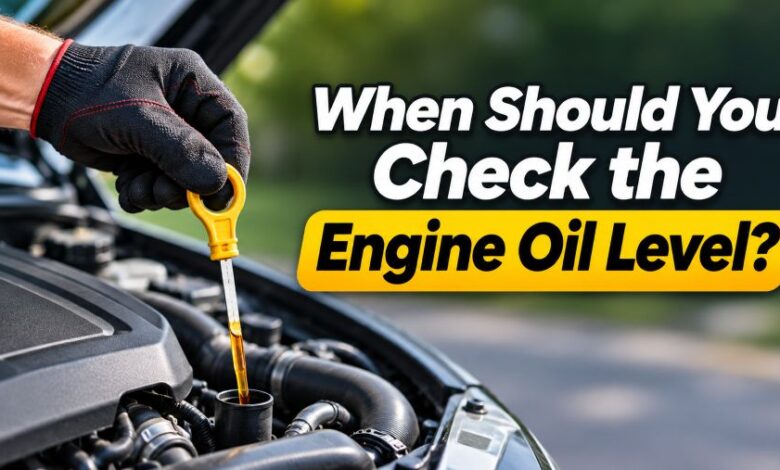
When should you check the engine oil level? Ideally, check it before driving, while your car is parked on level ground and the engine is cold. If you’ve just driven, switch off the engine and allow the oil to settle before checking. Many cars need around 5–10 minutes, but your owner’s manual should always come first.
It’s a small job. Yet many drivers forget it.
Your engine needs enough oil to protect its moving parts. Too little oil can cause serious wear. Too much can create problems too.
The good news? Checking takes only a few minutes.
Here’s how UK drivers can check their car’s engine oil correctly, understand the dipstick readings, and know when something needs attention.
Quick Facts About Checking Engine Oil
| Question | Quick Answer |
|---|---|
| Best time to check | Before driving, with a cold engine, unless the manual says otherwise |
| How often to check | Every few weeks and before long journeys |
| Where to park | Flat, level ground |
| Engine running or off? | Engine switched off |
| How long to wait after driving? | Often 5–10 minutes; follow your car’s manual |
| Correct oil level | Between MIN and MAX marks |
| Main tool needed | Clean cloth and oil dipstick |
| Cars without dipsticks | Use the electronic oil-level system |
| If oil is too low | Top up using the specified oil |
| If oil is above MAX | Avoid driving until the issue is assessed |
When Is the Best Time to Check Engine Oil?
The best time is usually before your first journey of the day.
Your engine has been resting overnight. Much of the oil has settled in the sump, making it easier to obtain a consistent dipstick reading.
But there’s an important detail.
Not every car uses the same checking procedure. Certain manufacturers specify a warm engine or particular operating conditions.
Always follow your vehicle handbook.
Should You Check Engine Oil When Cold?
For many cars, yes.
Checking before starting the engine is convenient. The engine parts are cooler, and the oil has had time to settle.
Park on flat ground first.
Then remove the dipstick, wipe it clean, reinsert it fully, and check the oil mark.
This method works for many traditional dipstick-equipped cars.
Can You Check Engine Oil When Hot?
You can check some vehicles after driving, but timing matters.
Never remove the dipstick while the engine is running.
Stop the engine first. Allow time for oil to return to the sump.
For many cars, waiting around 5–10 minutes is suitable. The engine and surrounding parts may still be hot, so take care.
Some manufacturers require different conditions.
Check the handbook before testing.
Why Does Level Ground Matter?
An uneven parking surface can affect the reading.
Oil collects differently when the car is tilted. That can make the dipstick show an inaccurate level.
Find a flat parking space.
Switch off the engine, secure the vehicle, and follow the correct waiting procedure.
How Often Should You Check Your Engine Oil?
A useful routine is every few weeks and before long journeys.
Don’t wait for your annual service.
Your engine can use some oil during normal operation. The amount varies by engine type, age, condition, and driving habits.
Some cars need closer attention.
| Driving Situation | When to Check |
|---|---|
| Normal everyday driving | Every few weeks |
| Before a long motorway journey | Before setting off |
| Older or high-mileage car | More frequently, based on oil usage |
| After noticing an oil leak | Before driving again, once the cause is assessed |
| After an oil-level warning | As directed by the warning and owner’s manual |
| Following an oil top-up | Recheck after the oil has settled |
If your car keeps losing oil, don’t simply keep adding more.
Find out why.
A leak, oil consumption issue, or another engine fault may need professional attention.
How to Check Engine Oil Level Using a Dipstick
Checking oil is easy once you understand the process.
You need a clean cloth or paper towel, the owner’s manual, and a small amount of suitable engine oil if topping up becomes necessary.
Step 1: Park Your Car on Flat Ground
Choose a safe, level parking space.
Switch off the engine and apply the parking brake.
Avoid checking on a steep driveway.
Step 2: Allow the Oil to Settle
If the engine is cold, follow your manufacturer’s checking instructions.
If you’ve just finished driving, wait for the recommended period before opening the bonnet.
Avoid touching hot engine components.
Step 3: Find the Oil Dipstick
Open the bonnet safely.
Look for a dipstick handle. Many are yellow, orange, or another bright colour.
Its position depends on the vehicle.
Check your owner’s manual if you’re unsure.
Step 4: Remove and Clean the Dipstick
Pull out the dipstick carefully.
Wipe the measuring end with a clean cloth.
This removes oil that could confuse the reading.
Step 5: Insert the Dipstick Again
Push the clean dipstick fully into its tube.
Then remove it once more.
Look closely at the oil mark.
Step 6: Read the Oil Level
Find the minimum and maximum markings.
They may appear as lines, holes, letters, or a marked area.
Your reading should fall between the specified limits.
Step 7: Put Everything Back
Return the dipstick securely.
If the oil level is correct, close the bonnet.
That’s the basic check completed.
Understanding Engine Oil Dipstick Readings
Not sure what the marks mean?
Use this table.
| Dipstick Reading | What It Means | What to Do |
|---|---|---|
| Below MIN | Oil level is too low | Add the specified oil carefully |
| Near MIN | Oil is within or close to the lower limit | Consider a top-up according to the manual |
| Between MIN and MAX | Oil level is within the indicated range | No top-up usually needed |
| Near MAX | Oil level is close to its upper limit | Don’t add unnecessary oil |
| Above MAX | Possible overfilling | Have excess oil corrected |
A common mistake is thinking more oil means better protection.
It doesn’t.
Your engine needs the correct amount, not the maximum possible amount.
How to Top Up Engine Oil Safely
Found a low reading?
First, confirm which oil your engine requires.
You can read our What Kind of Oil Does My Car Take? article for more information about oil grades and manufacturer requirements.
Then follow these steps.
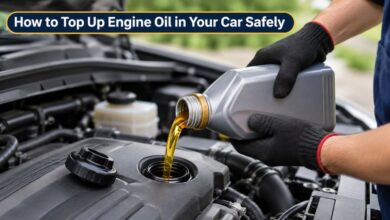
- Park safely and switch off the engine.
- Locate the engine oil filler cap.
- Check the specified oil grade and approval.
- Remove the filler cap carefully.
- Add a small amount of suitable oil.
- Allow the oil to settle.
- Recheck the dipstick.
- Repeat only if necessary.
- Secure the filler cap when finished.
Never pour in a large quantity without checking.
The distance between MIN and MAX does not represent the same oil volume in every engine.
If you’re unsure how much is needed, ask a qualified mechanic.
What Engine Oil Should You Use?
You may see labels such as 5W-30, 0W-20, or 5W-40.
These describe engine oil viscosity grades.
But the grade alone isn’t enough.
Different engines can require specific manufacturer approvals, even when the viscosity grade looks identical.
Check your vehicle manual for the correct grade and technical specification.
For more guidance, The AA explains how to check and top up engine oil, including how to read the dipstick and choose suitable oil.
Don’t guess based on what another driver uses.
Your car may have different requirements.
How to Check Oil in a Car Without a Dipstick
Some modern vehicles use electronic oil-level monitoring.
These systems display the oil level through the dashboard or infotainment screen.
The process differs between manufacturers.
You may need to park on level ground, reach a specified engine temperature, or use a dashboard menu.
Follow the vehicle’s displayed instructions.
Do not assume the electronic reading works the same way as a manual dipstick.
If the system cannot provide a valid reading, check the handbook or ask a garage.
What Happens if Your Engine Oil Is Too Low?
Low oil reduces the lubrication available to moving engine parts.
This can increase friction and heat.
Serious oil starvation may cause extensive engine damage.
Possible signs include unusual engine noise, visible leaks, or an oil warning message.
But remember something important.
A low oil level does not always trigger an early dashboard warning.
That’s why regular checks matter.
What Should You Do if the Red Oil Warning Light Appears?
Treat a red oil-pressure warning as urgent.
Pull over safely and switch off the engine as soon as possible.
Do not continue driving to see whether the warning disappears.
Low oil pressure can have several causes. The oil level might be correct, yet the engine could still have a serious lubrication problem.
Check the owner’s manual and arrange professional assistance.
If the warning stays on, do not restart or continue driving until the cause is resolved.
Is Dark Engine Oil a Problem?
Not always.
Engine oil naturally darkens during use.
Dark colour alone doesn’t prove that an oil change is overdue.
Some engines darken oil quickly.
Instead, follow the manufacturer’s servicing schedule.
Look for unusual changes too.
Milky or creamy oil can suggest fluid contamination. Thick sludge or visible particles may also indicate a problem.
Ask a mechanic to investigate anything unusual.
Common Mistakes When Checking Engine Oil
Even experienced drivers can make mistakes.
Here’s what to avoid.
Checking on a Slope
A tilted car can produce a misleading reading.
Use level ground.
Reading the Dipstick Without Wiping It
Oil left on the dipstick can confuse the result.
Always clean and reinsert it before checking.
Ignoring the Owner’s Manual
Not every engine needs the same checking conditions.
Manufacturer instructions come first.
Adding Too Much Oil
Overfilling can damage the engine.
Top up gradually and recheck.
Using the Wrong Oil
Matching the viscosity grade isn’t always enough.
Check the required manufacturer approval.
Ignoring Repeated Oil Loss
Frequent topping-up may signal a mechanical problem.
Have unexplained oil consumption checked.
Engine Oil Checks Before Long UK Journeys
Planning a motorway trip?
An oil check is worth doing beforehand.
Long journeys can place sustained demands on your engine, so checking fluid levels before setting off is sensible.
Also inspect your tyres, coolant level when cold, screenwash, and vehicle lights.
Check engine oil before leaving, rather than waiting for a dashboard warning.
And if the level looks unusually low, investigate before starting the journey.
FAQs
1. When should you check the engine oil level?
For many cars, check before driving while the engine is cold and parked on level ground. Follow the manufacturer’s instructions if they specify another procedure.
2. Should engine oil be checked hot or cold?
Cold checks are suitable for many vehicles. Some manufacturers specify a warm-engine procedure, so always follow the owner’s manual.
3. How long should you wait after driving to check the oil?
Many cars allow a check after approximately 5–10 minutes with the engine switched off. The correct waiting period depends on the vehicle.
4. How often should you check car engine oil in the UK?
Every few weeks is a useful routine. Check before long journeys and more often if your vehicle regularly consumes oil.
5. Where should the oil level be on the dipstick?
The oil mark should sit between the MIN and MAX indicators. Avoid leaving it below the minimum or above the maximum.
6. Can you check engine oil without a dipstick?
Yes, if your vehicle has an electronic oil-level monitoring system. Follow the manufacturer’s dashboard instructions.
7. Can you drive with low engine oil?
Driving with insufficient oil risks engine damage. If the level is below the specified minimum, correct it before driving. A red oil-pressure warning requires stopping safely and switching off the engine.
8. Does dark engine oil mean it needs changing?
Not necessarily. Oil often darkens during normal use. Follow the manufacturer’s oil-change schedule and investigate unusual contamination.
Final Thought
Checking engine oil shouldn’t be complicated.
Find level ground. Let the oil settle. Read the dipstick correctly.
Make it a regular habit.
For most UK drivers, a check every few weeks and before long journeys is a sensible starting point.
Just remember that every engine differs.
When should you check the engine oil level? Follow your car’s handbook, check before driving when appropriate, and don’t ignore unexpected oil loss.
A few minutes of care can help protect an expensive engine.


One Comment